
Climate
Low‑Carbon Development Programme
Considering the importance of the climate agenda and supporting national goals to achieve carbon neutrality by 2060 and reduce GHG emissions by 15% from the 1990 level, KMG intends to focus on a moderate, balanced, and consistent decarbonisation of its operations.
To address this challenge, in November 2024 KMG’s Board of Directors approved KMG’s Low-Carbon Development Programme 2060 ("LCDP 2060"), replacing the LCDP 2031, which had been in place since 2021. The LCDP 2060 KMG’s Low-Carbon Development Programme 2060. provides for delivering on the targets to reduce CO2 emissions from the 2019 levels by 15% by 2031 and to lower GHG emissions by 64% by 2060. As part of the programme, we drafted and approved the Action Plan 2060 (the “Action Plan”). The Action Plan includes a number of initiatives aimed at reducing GHG emissions and focused on four areas: energy efficiency, renewable energy, methane monitoring, and organisational measures.
| Key indicators | Baseline year indicator in 2019 | Indicator in 2027 | Target indicator in 2031 | Target indicator in 2060 |
|---|---|---|---|---|
| Reduction in direct and indirect CO2 emissions (Scope 1+2) | 10.7 mln tonnes of CO2e | 10.7 mln tonnes of CO2e (0%) | 9.1 mln tonnes of CO2e (‑15%) | 3.4 mln tonnes of CO2e (‑64%) |
| Reduction of methane emissions | 54.2 thous. tonnes of CH4 | 56.9 thous. tonnes of CH4 (-20%) | 36 thous. tonnes of CH4 (-32%) | 2 thous. tonnes of CH4 (-96%) |
| Reduction of carbon intensity | – | 0% | –15% | –60% |
| Reduction of methane intensity, tonnes of CH4 / thous. tonnes per year | 3.28 | 2.62 | 1.6 | 0.29 |
| Lower energy consumption | – | –15% | –60% | |
| Share of renewable energy sources in KMG’s electricity consumption mix vs the baseline | 0.005% (211 MWh) | 10% | 15% | 50% |
| CO2 injection using the CCUS technology, thous. tonnes | – | – | 9 | 421 |
| CO2 injection in blue hydrogen production, thous. tonnes | – | – | – | 172 |
| SAF production, thous. tonnes per year | – | – | 40 | 1,440 |

The programme seeks to systematise the Company’s decarbonisation efforts and includes three low‑carbon development scenarios through 2060:
| Development scenarios | Targets for reducing GHG emissions by 2060 | Initiatives |
|---|---|---|
| Realistic development scenario (energy efficiency and renewable energy sources (RES)) | –48% |
|
| Green development scenario | –58% |
|
| Deep decarbonisation scenario (innovations and offsets) | –64% |
|
Renewable energy development
KMG is actively developing renewable energy projects in partnership with Total Eren and Eni. These initiatives seek to reduce the carbon footprint, ensure a reliable power supply to production facilities, and diversify the Company’s business portfolio. We plan to build RES facilities with a total capacity of 1.24 GW in the Zhambyl and Mangistau regions.
The Company also seeks to increase the share of renewable energy in its consumption. In 2025, electricity consumption from renewable energy sources totalled 37,230.9 thous. kWh. 10,000 I‑REC certificates were purchased.
In 2025, PetroKazakhstan Oil Products and Caspi Bitum solar panels generated 151.1 thous. kWh of electricity for street lighting.
Renewable energy projects
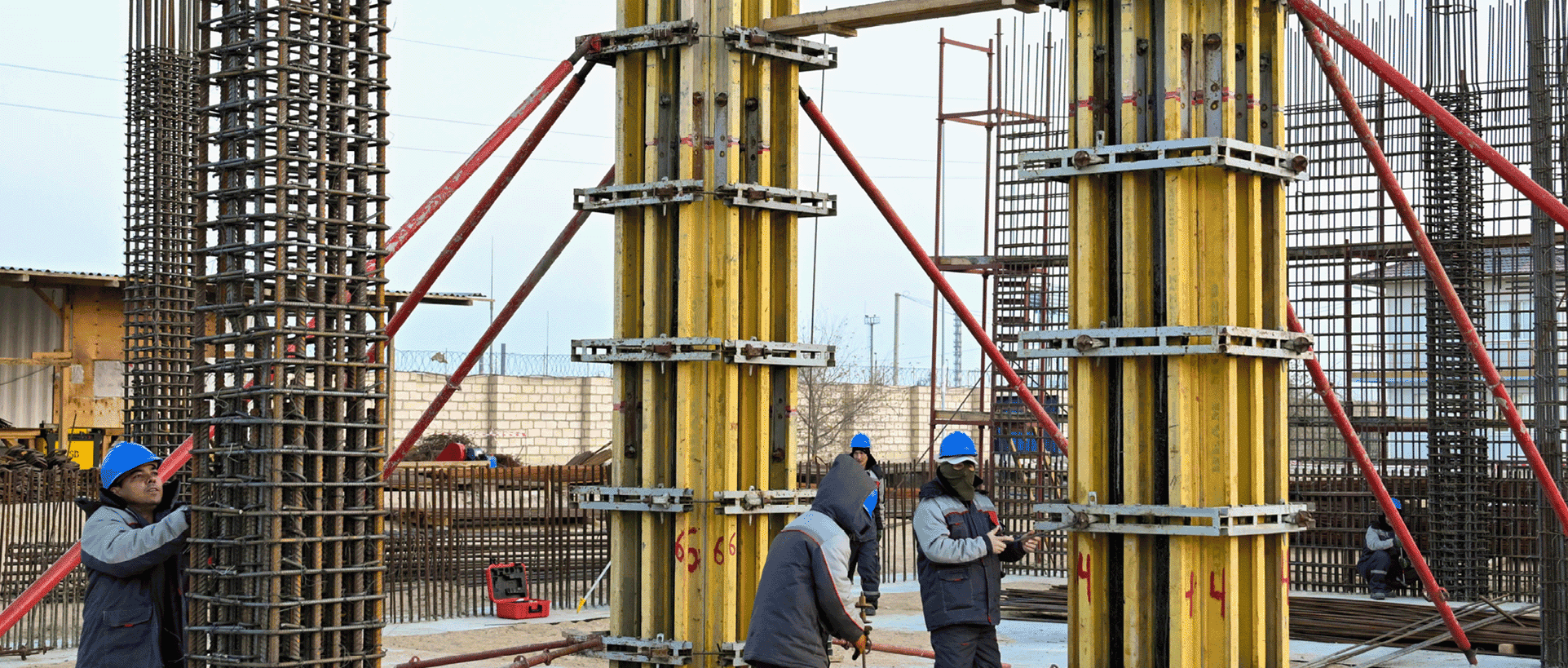
KMG and Eni are jointly implementing a hybrid power plant construction project. The project will be Kazakhstan’s first hybrid solution combining three types of generation: wind (77 MW), solar (50 MW), and gas (120 MW).
It will integrate renewable energy generation (wind and solar) with a gas power plant. This format will reduce CO2 emissions and ensure stable energy supply by using gas manoeuvrable capacity to compensate for the variable generation from renewable energy sources.
The project is designed to provide reliable energy supply to KMG facilities in the region and will create up to 800 temporary and 70 permanent jobs.
Current status
In September 2025, the 50 MW solar power plant successfully passed comprehensive testing and was officially launched on 27 September with the participation of KMG and Eni leadership. Design, construction and installation work for the gas power plant is in progress. The plant is planned to reach its full design capacity by the end of 2026.
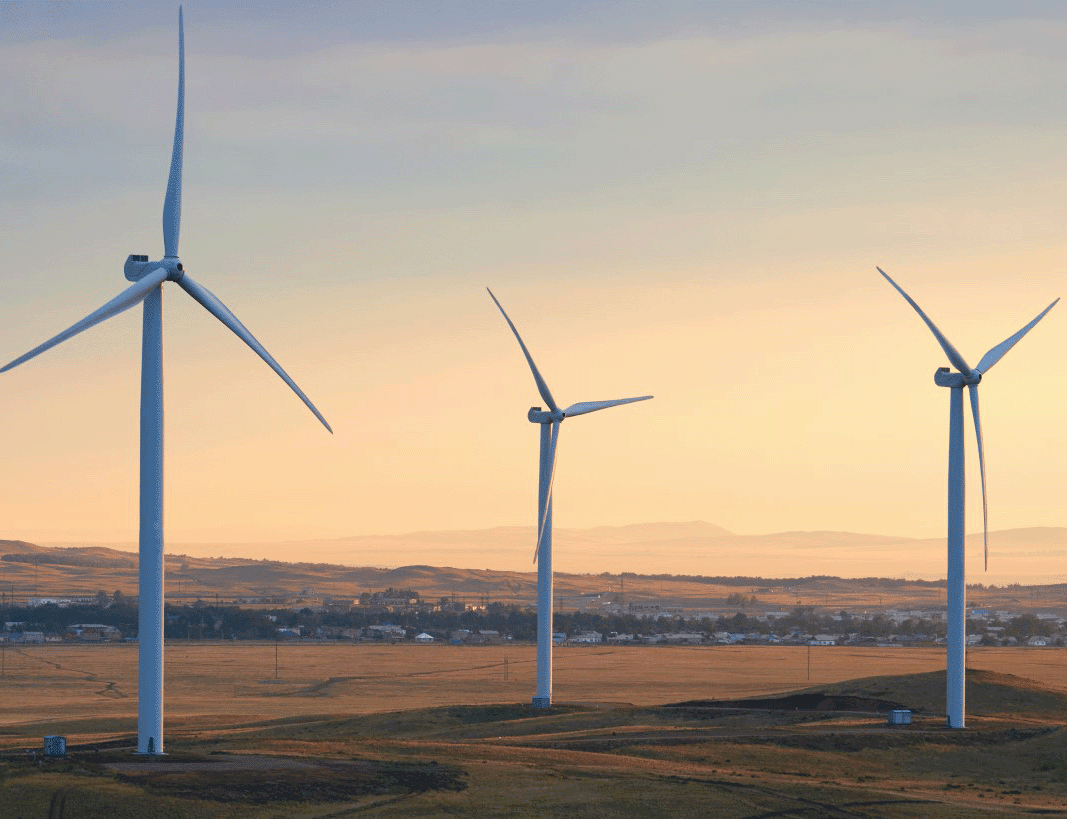
KMG and TotalEnergies are jointly developing a 1 GW wind power plant with a 300 MW / 600 MWh energy storage system. The project aims to improve power supply reliability in the southern regions and is expected to cut CO2 emissions by over 2 mln tonnes annually.
The feasibility study and wind surveys are now complete, engineering design is in its final stages, and conditional letters of award have been signed with key equipment suppliers. Commissioning is scheduled for 2028.
Introduction of methane management
KMG pays special attention to reducing methane emissions as a potential tool to spearhead a carbon offset policy and minimise carbon footprint.
KMG joined the OGMP 2.0 methane emissions reporting framework. Under OGMP 2.0 requirements, companies must report methane emissions annually, with reporting levels ranging from the basic Level 1 to Level 5 – the Gold Standard. KMG has submitted two reports (for 2023 and 2024) on methane emissions at Level 3.
In September 2025, KMG Engineering purchased specialised equipment – an optical gas imaging (OGI) camera for monitoring methane leaks. Personnel at one of the subsidiaries were simultaneously trained in its use.
KMG Group approved the Working Instruction on Methane Leakage Management and developed a draft corporate standard aimed at unifying approaches and improving control efficiency.
Work continues to establish the baseline level of methane emissions at subsidiaries and affiliates. With support from international companies and consultants, instrumental measurements of methane leaks were carried out at Kazgermunai, Embamunaigas, and Mangistaumunaigaz. In autumn 2025, partial aerial monitoring of methane leaks was conducted by aircraft with support from the Oil and Gas Climate Initiative (OGCI).
A number of training sessions and workshops on methane emission management were held for experts from subsidiaries and associates, covering quantitative assessment, gas utilisation, identification of key leak sources and elimination methods.
KMG is also cooperating with the Ministry of Ecology and Natural Resources of Kazakhstan on methane emission regulation. In February 2025, the Company submitted a package of proposals to the Ministry aimed at improving state policy in this area.
To reduce methane emissions, a pilot project is being implemented at Embamunaigas in partnership with Vema Carbon to reduce methane leaks with subsequent production of carbon units for the voluntary market.
Providing annual reporting on methane emissions, conducting measurement campaigns, implementing the LDAR programme for methane leakage detection and repair, and satellite monitoring are the key elements of KMG’s methane management set to reduce methane emissions looking forward.
CCUS project
Screening of CO2 emissions was carried out in the Atyrau and Mangistau regions. The concept of a pilot plant with a capacity of 10–20 thous. tonnes of CO2 per year based at Embamunaigas’s gas treatment unit was studied. The results showed that under current macroeconomic conditions, the project requires additional incentives and regulatory support.
As part of efforts to reduce the carbon footprint, work has begun to identify potential traps for CO2 injection. The emission sources under consideration are the plants within the Downstream segment. Specific injection sites will be determined based on study results.
The need for the project stems from previous research and development work, which highlighted the need to verify the correctness of trap selection and assess their actual capacity for CO2 storage. To that end, a set of laboratory and pilot tests is planned to capture and inject CO2 into the reservoir.
Implementation of the project is expected to refine the pre‑existing geological model (S. Nurzhanov field), obtain the necessary data to make an informed decision on transitioning to pilot tests, and implement a pilot project using modular installations in partnership with Shell.
In 2026, the Company plans to establish a unified CCUS database, including CO2 emission sources and potential geological traps for injection. Work will continue on technology selection and establishing partnerships with international companies, securing external funding sources, and preparing applications. The Company also plans to promote changes to the regulatory framework in collaboration with government bodies and industry associations.
Hydrogen energy development
KMG strategically positions itself in the hydrogen market by applying a step‑by‑step approach.
Key areas of activity include the production of blue hydrogen with carbon dioxide capture, use of renewable sources for green hydrogen production, and R&D of new technologies for hydrogen storage and transport.
A comprehensive programme of research and applied work on hydrogen technology development has been carried out, including the development of materials for hydrogen storage, the creation of digital tools for assessing hydrogen production potential, the implementation of pilot projects, and the study of prospects for various types of hydrogen.
As part of developing the Hydrogen Atlas of Kazakhstan, an assessment of green hydrogen production potential in the western, central, and northern regions was conducted, environmentally friendly water intake points were identified, and the systematisation of data on water resources and renewable energy sources was completed. Analysis of flood and wastewater use demonstrated the prospects for utilising municipal wastewater in the cities of Astana, Shymkent, and Kostanay. An algorithm for automatic calculation of parameters to determine hydrogen production potential has been created.
Together with Green Spark, the first full‑cycle pilot project in Kazakhstan for the production and use of green hydrogen is being implemented in Atyrau, with the aim of powering the KMG Engineering laboratory building with solar energy and hydrogen. Industrial safety approvals have been received and solar panels with a capacity of 200 kW have been installed. The expected benefits of the project include preventing up to 180 tonnes of CO2 emissions per year, energy savings of 280 thous. kWh per year, and a payback period of up to two years. The solution is planned to be scaled to other KMG subsidiaries and affiliates.
A feasibility study on the production of blue hydrogen and its derivatives has been completed. The potential of natural (white) hydrogen is being assessed: production projects in the USA, China, and Africa have been analysed, and work is under way to conclude an NDA with Terra‑A. In May of the reporting year, the third annual seminar on hydrogen energy was held online, for the first time covering not only KMG Group employees but also external participants – approximately 100 people in total.
In 2026, the Company plans to file an application to register intellectual property rights for the developed digital platform for hydrogen energy, which will provide legal protection and enable further scaling of digital solutions. The pilot project for the production and application of green hydrogen will continue to be rolled out to other KMG subsidiaries, taking into account the results of implementation in Atyrau. An international training seminar is also planned to expand professional competencies and exchange experience in the field of hydrogen technologies and low‑carbon solutions. The Samgau project will continue developing materials for hydrogen storage, preparing scientific publications, and conducting research aimed at improving the efficiency and sustainability of technologies. In addition, applications for R&D in new areas of hydrogen energy are planned.
Sustainable aviation fuel (SAF)
SAF is a low‑carbon alternative to traditional Jet A‑1 aviation fuel and, depending on the raw materials and technology used, can reduce the carbon footprint by up to 95%.
SAF is fully compatible with Jet A‑1 and can be blended in any proportion without requiring changes to aviation infrastructure or engines.
KMG is considering the possibility of producing SAF in Kazakhstan. In 2024, ICF SH&E Limited conducted preliminary studies to analyse demand, supply, and technologies. Based on that research, the project potential was confirmed and cooperation with international technology partners LanzaJet and Mitsui & Co. was initiated. As part of the completed feasibility study, the estimated capacity of the future plant was determined: processing of 100 thous. tonnes of bioethanol per year with production of 54 thous. tonnes of SAF and 6 thous. tonnes of renewable diesel. Bioethanol from domestic producer BioOperations is being considered as the primary raw material. In 2025, a framework agreement was signed on transitioning to the Pre‑FEED and FEED stages, work is underway to form a joint venture, and preparations for the next stage of the project are in progress.
The project envisages the creation of the first plant in Central Asia for the production of environmentally friendly aviation fuel.
Forest‑climate projects
To obtain offset credits, together with Chevron, KMG is running a project to create a green area around Pavlodar on an area of 2 thous. ha.
The potential for absorption of carbon dioxide GHG emissions on land plots was assessed in a desk study, as well as field studies and by way of soil analyses. A package of materials necessary for further corporate decision‑making was compiled, and a draft Memorandum of Understanding between KMG, Chevron, and the Akimat of the Pavlodar Region was prepared.
In general, within the LCDP framework, KMG is planning to implement six forest‑climate projects.
International Renewable Energy Certificates (I‑REC)
To reduce indirect GHG emissions, KMG purchased International Renewable Energy Certificates (I‑REC). Through these certificates, the Company offset its carbon footprint by 10 thous. MWh, corresponding to the expected electricity consumption of the KMG Corporate Centre in 2025.
Voluntary I‑REC certification represents a proof of energy generation from renewable sources. The certificate is linked to 1 MWh of green electricity, location of the power station, and time period of electricity generation. KMG acquired certificates issued in 2024 by renewable energy producers in line with the International Tracking Standard Foundation’s standard. Recognised by GHGP, CDP, RE100, ISO and other international organisations, I‑REC certificates are traded globally and issued in 51 countries.
- Transition to the Pre‑FEED and FEED stages of the project to construct a plant for the production of SAF using Alcohol‑to‑Jet (ATJ) technology from LanzaJet, including development of design documentation and signing of a licence agreement.
- Formation of a unified CCUS database, including CO2 emission sources and potential geological traps for injection.
- Analysis of low‑carbon hydrogen production from APG / natural gas, utilised formation water and/or wastewater at fields.
- Initiatives to develop methane management at KMG.
- Offset projects.
Climate reporting
KMG provides a full report on greenhouse gas (GHG) emissions, including Scope 1, 2, and 3. Prior to 2023, the Company disclosed Scope 3 emissions only under category 11 "Use of sold products". Starting from 2023, KMG expanded the disclosure to cover five categories. Currently, KMG reports on five key categories within Scope 3:
– Category 3: Other indirect emissions related to energy consumption, including transmission losses;
– Category 6: Business travel emissions;
– Category 7: Employee commuting emissions;
– Category 9: Downstream transportation and distribution emissions;
– Category 11: Use of sold products emissions.
This initiative paves the way for the development of a strategy of cooperation with our suppliers and consumers to consistently reduce indirect emissions of KMG’s products.
KMG has introduced a system of monitoring, accounting, and verification of GHG data. The Company seeks to maintain a comprehensive GHG inventory, analysing both direct and indirect emissions across the entire product life cycle. This approach aligns with international recommendations on GHG emission inventory and enables KMG to assess its carbon footprint as comprehensively as possible.
The GHG emission inventory is in line with international standards and methodologies, such as ISO 14064, GHG Protocol, and the Guidelines of the IPCCIntergovernmental Panel on Climate Change, IPCC. under the United Nations Framework Convention on Climate Change (UNFCCC).
Climate change and greenhouse gas emissions
In 2025, CDP conducted another assessment for 2024, and KMG was rated at B. This indicates stable and consistent development of climate and environmental practices compared to previous years.
Direct carbon dioxide emissions at KMG Group totalled 7.7 mln tonnes of CO2 (9.06 mln tonnes of CO2e The CO2 equivalent data are presented using the global warming potential ratios set out in the IPCC Fifth Assessment report (28 for methane and 265 for nitrous oxide).) in 2024.
| Indicator | Unit | 2021 | 2022 | 2023 | 2024 |
|---|---|---|---|---|---|
| Scope 1 direct emissions | mln tonnes of CO2e | 10.6 | 8.1 | 8.6 | 9.06 |
| Location‑based Scope 2 indirect emissions | mln tonnes of CO2e | 3.3 | 3.3 | 3.5 | 3.4 |
| Market‑based Scope 2 indirect emissions | mln tonnes of CO2e | 3.3 | 3.2 | 3.4 | 3.3 |
| Scope 3 indirect emissions | mln tonnes of CO2e | 62.1 | 61.8 | 55.7 | 59.2 |
The greenhouse gas emissions data were verified by independent accredited organisations’ reports for each subsidiary or associate. Data for 2025 will be disclosed in KMG’s sustainability reports and CDP report to be published in 4Q 2026. We seek to ensure consistency and comparability when preparing our disclosures. We are committed to enhancing disclosures and increasing the scope of reporting around our Scope 3 emissions.
The main types of greenhouse gases emitted as a result of the Company’s operations include carbon dioxide (CO2), methane (CH4), and nitrous oxide (N2O), and are categorised according to the core activities: production, refining, and transportation.
The CO2 emission intensity indicator for 2024 for the upstream business was 121 tonnes of CO2 per 1,000 tonnes of hydrocarbons produced, which is 2.5% above the IOGP industry average of 118 tonnes of CO2 per 1,000 tonnes of hydrocarbons produced. The methane emission intensity indicator for 2024 for the upstream business was 2.17 tonnes of CH2 per 1,000 tonnes of hydrocarbons produced.
KMG has developed and approved the methodology for monitoring and reporting on greenhouse gas emissions and the Internal Carbon Pricing Programme (the “ICP Programme”).
The methodology defines key approaches to the recording and monitoring of GHG emissions across KMG subsidiaries and associates and provides a unified methodological basis for measuring GHG emissions across KMG subsidiaries.
The main goal of the ICP Programme is to assess and minimise the Company’s financial risks associated with the tightening of carbon regulations, as well as to reallocate some investments from carbon‑intensive projects to low‑carbon ones. The introduction of internal pricing for carbon emissions is seen as a strategic tool to manage the risks associated with the impact of climate‑related regulations on the Company’s operations and helps create additional opportunities for upgrading production capacities and achieving KMG’s GHG emission reduction targets.
For more details on KMG’s contribution to climate action, see the Sustainability Report.
Energy saving and energy efficiency programmes
Using energy resources and improving energy efficiency
KMG’s energy saving and energy efficiency efforts are based on the methodology set out in ISO 50001 Energy management systems, an internationally recognised best‑practice framework for systemic energy management.
To comply with KMG’s Low‑Carbon Development Programme, the Energy Policy of KMG, which applies to all subsidiaries, associates and contractors of KMG, as well as Regulations on Energy Saving and Efficiency at KMG Group were approved. KMG Group also conducted a targeted energy audit of process furnaces and boiler equipment at oil producing companies. Subsidiaries and associates (Karazhanbasmunai, Kazgermunai, Kazakhoil Aktobe, Kazakhturkmunay, Pavlodar Refinery, PetroKazakhstan Oil Products, and Caspi Bitum) also approved Regulations on Energy Saving and Efficiency.
In 2024, KMG approved its Low‑Carbon Development Programme 2060. The following strategic goals are planned in energy efficiency and resource saving:
- long‑term strategic planning: developing comprehensive plans to improve energy efficiency across KMG Group;
- effective energy management: ensuring transparent management of energy flows through reliable and measurable standards;
- centralised monitoring: centralised monitoring of operational processes in the field of energy efficiency (EE) improvement;
- systemic approach to working with public authorities: maintaining ongoing cooperation with public authorities on energy‑saving initiatives;
- sharing best practices: sharing and rolling out robust EE practices throughout the Company;
- cost reduction and optimisation: identifying and eliminating non‑production costs while optimising the use of resources;
- improving profitability: improving profitability by taking measures to reduce fuel and energy losses and eliminate inefficient costs;
- improved financial performance: improving financial results through energy savings.
Energy consumption
In 2025, total energy consumption across KMG Group amounted to 124.9 mln GJ, down 3.5% year‑on‑year (129.4 mln GJ), including 14.7 mln GJ in electricity, 3.7 mln GJ in heat, 1.8 mln GJ in motor fuel, and 104.6 mln GJ in boiler and heating fuel (with oil refinery gas, natural gas, stripped gas, electricity, and associated petroleum gas accounting for 29.1%, 26.3%, 13.1%, 14.0% and 10.2% of the total energy consumption, respectively).
The total energy consumption is divided among the following business segments: Upstream, Midstream, and Downstream (Oil Refining and Gas Processing).
In 2025, KMG Group’s self‑generated energy amounted to 748.9 mln kWh in electricity and 4,225.2 thous. Gcal in heat.
In 2025, electricity consumption from renewable energy sources totalled 37,230.9 thous. kWh, including:
- purchase of electricity for own needs from Financial Settlement Centre of Renewable Energy – 25,600.8 thous. kWh;
- purchase of electricity generated by the solar power plant of the hybrid project – 11,630.1 thous. kWh.
In 2025, Shymkent Refinery and Caspi Bitum solar panels generated 151.1 thous. kWh of electricity for street lighting.
Reducing energy consumption
The main strategic focus areas for energy saving and energy efficiency development in KMG Group include upgrade and replacement of process furnaces and boilers, installation of variable speed drives on pumps, thermal integration of process flows, modernisation of the lighting system, and more.
In 2025, a total of 87 initiatives were implemented (14 in design and estimation, 62 in construction and installation, and 11 at the organisational level) to upgrade process equipment, replace gas burners in furnaces, introduce energy‑saving technologies, optimise heat generation and consumption, and modernise lighting systems, etc.
Estimated annual savings of fuel and energy amounted to 1,935.3 thous. GJ, equivalent to a reduction of GHG emissions by 128.3 thous. tonnes of CO2. The effect in physical terms represents savings of 22,468 thous. kW of electricity, 21,208 Gcal of heat, 2,855 tonnes of boiler and heating fuel, 5,807 thous. m³ of dry stripped gas, a 37,935 thous. m³ of natural gas, 65 tonnes of diesel fuel, and 3,310 thous. m³ of associated petroleum gas. Overall spending on the energy saving and energy efficiency initiatives was KZT 6,172.9 mln.
Energy intensity
In 2025, KMG Group’s upstream energy intensity averaged at 2.39 GJ per tonne of hydrocarbon production, 59% above the IOGP average of 1.5 GJ per tonne recorded in 2024.
KMG Group’s average does not reflect the status quo because of a severe distortion owing to high energy intensities at Ozenmunaigas and Karazhanbasmunai. Karazhanbasmunai’s energy consumption per tonne of produced hydrocarbons is five times higher than the IOGP global average, as production at the Karazhanbas field requires the use of steam and hot water to displace oil from subsoil reservoirs. Ozenmunaigas’s energy intensity is more than twice the industry average, due to high dissolved paraffin concentrations and the rheological properties of oil, which means that it needs to be heated during production and transportation in both winter and summer.