
Key investment projects
Investment portfolio overview
In line with the 2022–2031 Development Strategy, the Company is consistently building an investment portfolio with a focus on long‑term growth, sustainability and technological upgrade. Today it encompasses a wide range of projects seeking to diversify the business, expand the product line, improve efficiency across the Company’s value chain, and strengthen the resource base. KMG supports projects in both conventional (exploration, transportation and refining of oil) and new realms (petrochemicals, alternative energy, and carbon footprint reduction at its existing operating assets).
As of late 2025, the total value of investment projects involving the Company amounted to KZT 62,499 bln, including KZT 22,354 bln attributable to KMGIncluding KMG’s participation in megaprojects (Tengiz, Kashagan, Karachaganak) and joint ventures..
In 2025, as part of the long‑term growth strategy and strengthening its competitive edge, KMG continued to expand its investments. Over the year, final investment decisions were made on projects totalling KZT 544 bln, including KZT 531 bln attributable to the Company.
| Project | Interest | Total cost (approved), KZT bln | Cost attributable to KMG share, KZT bn |
|---|---|---|---|
| Projects with FID made in 2025: | 544 | 531 | |
| Construction of the first integrated gas chemical complex. Phase 2 (construction of trunklines – ethane, propane) | 100% | 339 | 339 |
| Programme for transitioning to a three‑year continuous run between turnarounds at Pavlodar Refinery | 100% | 110 | 110 |
| Transition to a three‑year continuous run between turnarounds at Atyrau Refinery | 100% | 37 | 37 |
| Efficiency improvement at Atyrau Refinery | 100% | 33 | 33 |
| Transition to a longer interval between repairs at Shymkent Refinery | 50% | 24 | 12 |
| Project type | Total investment portfolio, KZT blnIncluding KMG’s participation in megaprojects (Tengiz, Kashagan, Karachaganak) and joint ventures. Including historical costs and foreign exchange differences. Including preliminary cost estimates for exploration projects, factoring into further project implementation. | Share of investment portfolio attributable to KMG, KZT bln | ||
|---|---|---|---|---|
| 31 December 2024 | 31 December 2025 | 31 December 2024 | 31 December 2025 | |
| Oil and gas exploration and production | 42,747 | 52,300 | 13,216 | 16,451 |
| ESG projects | 991 | 728 | 363 | 200 |
| Oil transportation | 368 | 411 | 136 | 154 |
| Refining and marketing of oil products | 587 | 573 | 501 | 364 |
| Petrochemicals | 6,460 | 8,353 | 5,063 | 5,051 |
| Other | 117 | 134 | 111 | 134 |
| Total | 51,270 | 62,499 | 19,390 | 22,354 |
Oil and gas exploration and production
Project “Subsurface Geological Study for Preliminary Seismic Surveys across Five Blocks”
(GIN 1.0)The project saw seismic survey data for Mugodzhary, Berezovsky, Zharkyn, Bolashak and Northern Ozen (Aktobe, West Kazakhstan and Mangistau regions) processed and interpreted.
Project “Subsurface Geological Study for Preliminary Seismic Surveys across Three Blocks”
In 2025, the Company completed field seismic surveys at Southern Shu‑Sarysu and Bereke (Ulytau and Atyrau regions) and reprocessed historical data for Shygys, Aktobe Region.
Kalamkas‑Sea and Khazar development project
In 2025, the Company completed the FEED and drafted documents to make a final investment decision to transition to the next stage.
While the FID was to be made in December 2025, current sanctions imposed on LUKOIL effective from November 2025 create material legal, financial and operational constraints, forcing the parties to look into additional implementation options.
The Company signed hydrocarbon exploration and production contracts for complex projects:
- Northern Ozen, Mangistau Region;
- Bolashak, Mangistau Region;
- Zhylyoi, Atyrau Region;
- Berezovsky, West Kazakhstan Region.
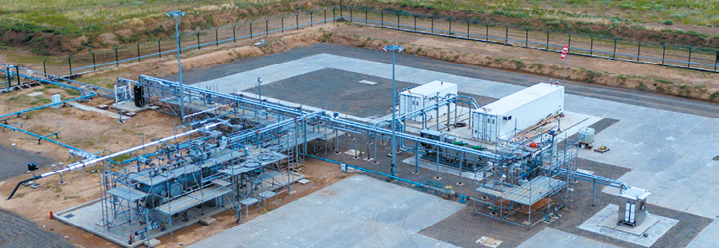
At the Rozhkovskoye field, Phase 1 equipment has now been fully deployed as per the design, achieving a design capacity of 1.6 mln m³ of gas per day. Gas production in 2025 amounted to 469 mln m³ and gas condensate production to 343 thous. tonnes. Targets for 2026 provide for 548 mln m³ of gas and 384 thous. tonnes of condensate.
At the East Urikhtau field, 2025 saw the completion of a work programme comprising the drilling and commissioning of two production wells and an overhaul of the oil pipeline. Hydrocarbon production for the year amounted to 95 thous. tonnes, with associated gas production of 79 mln m³.
A key focus of the period was preparing for commercial development of the field’s gas condensate section. The project envisages bringing approximately 30 bln m³ of natural gas reserves into production. On 25 December 2025, addendum No. 1 to the raw gas processing agreement dated 16 June 2025 was signed between Urikhtau Operating and CNPC International Aktobe Petroleum. Commercial development of the Central Urikhtau field is scheduled to begin in 2026, with gas production ramping up progressively towards a potential of 1 bln m³ per year.
Tengiz, Kashagan and Karachaganak megaprojects
KMG holds stakes in the nation’s largest oil and gas assets – Tengiz (20%), Kashagan (16.88%) and Karachaganak (10%) developed in partnership with strategic investors.
Tengizchevroil
TCO completed the Future Growth Project (FGP) and the Wellhead Pressure Management Project (WPMP) designed to boost oil production by 12 mln tonnes per year.
In April 2024, the company commissioned WPMP facilities to maximise the load of production facilities. By the end of 2025, the project costs amounted to USD 47.8 bln against the approved budget of USD 48.9 bln, and overall progress was 100%.
In January 2025, the Third‑Generation Plant (TGP) obtained the first batch of oil, with total daily production at Tengizchevroil at approximately 120 thous. tonnes. In June 2025, the Company signed an FGP and WPMP commissioning certificate.
Karachaganak
- In September 2024, we successfully completed the testing of the 5th injection compressor, with the commissioning certificate signed in March 2025.
- The 6th injection compressor project is now in the active construction phase, with completion progress at 97% ahead of the schedule. The project is expected to be commissioned in 2Q 2026.
These projects seek to maintain the production plateau at 10–11 mln tonnes of hydrocarbons per year.
Kashagan
Oil production at the Kashagan field is currently underway as part of Phase 1 development. The Company is considering projects for Phase 2 development aimed at increasing crude oil and condensate output by a total of ca. 710 thous. bbl per day (ca. 89.5 thous. tonnes per day):
- Phase 2A involves increasing oil production by 6.3 thous. tonnes per day (with the overall production at Kashagan reaching 63 thous. tonnes or 500 thous. bbl per day) by supplying raw gas to QazaqGas’ new gas processing plant (GPP) with a capacity of 2.5 bln m3 per year. NCOC and QazaqGas signed a FEED agreement; following the FEED, the parties will determine if the project is ready for implementation, agree on raw gas offtake terms and make a joint investment decision;
- Phase 2B involves increasing oil production at Kashagan by 26.5 thous. tonnes per day (210 thous. bbl per day) to 89.5 thous. tonnes per day (710 thous. bbl per day), with an additional raw gas production of 6 bln m3 per year. Conceptual studies of potential synergies with Tengiz are underway.
Refining and marketing of oil products
Given an expected rise in domestic consumption of oil products, KMG remains focused on developing the country’s refining capacities to ensure reliable supply. That said, we are looking into ways to expand PKOP and Pavlodar Refinery capacities to 12 mln tonnes and 9 mln tonnes per year, respectively.
KMG also plans to conduct a comprehensive audit of the current equipment to draft a three‑to‑five‑year upgrade programme for all refineries. With that in mind, KMG is increasing time between repairs across all refineries and taking steps to improve equipment reliability for the refineries to operate without interruption for three to four years.
Atyrau Refinery plans to implement a set of efficiency measures to eliminate process bottlenecks and boost the output of light oil products. In 2025, the company ranked relevant subprojects to focus on the most important ones and take timely steps to improve the efficiency of the key facilities and off‑site infrastructure.
To increase fuel supply in the north and east of Kazakhstan, Pavlodar Refinery runs projects related to winter diesel fuel production, including the reconstruction of a diesel hydrotreating plant, integration of a dewaxing unit, and building a hydrogen unit. The commissioning of these facilities is scheduled for 2026.
In 2024–2025, to increase the domestic supply of road bitumen, the company expanded Caspi Bitum’s oil refining capacity to 1.5 mln tonnes per year, with up to 750 thous. tonnes of bitumen produced annually.
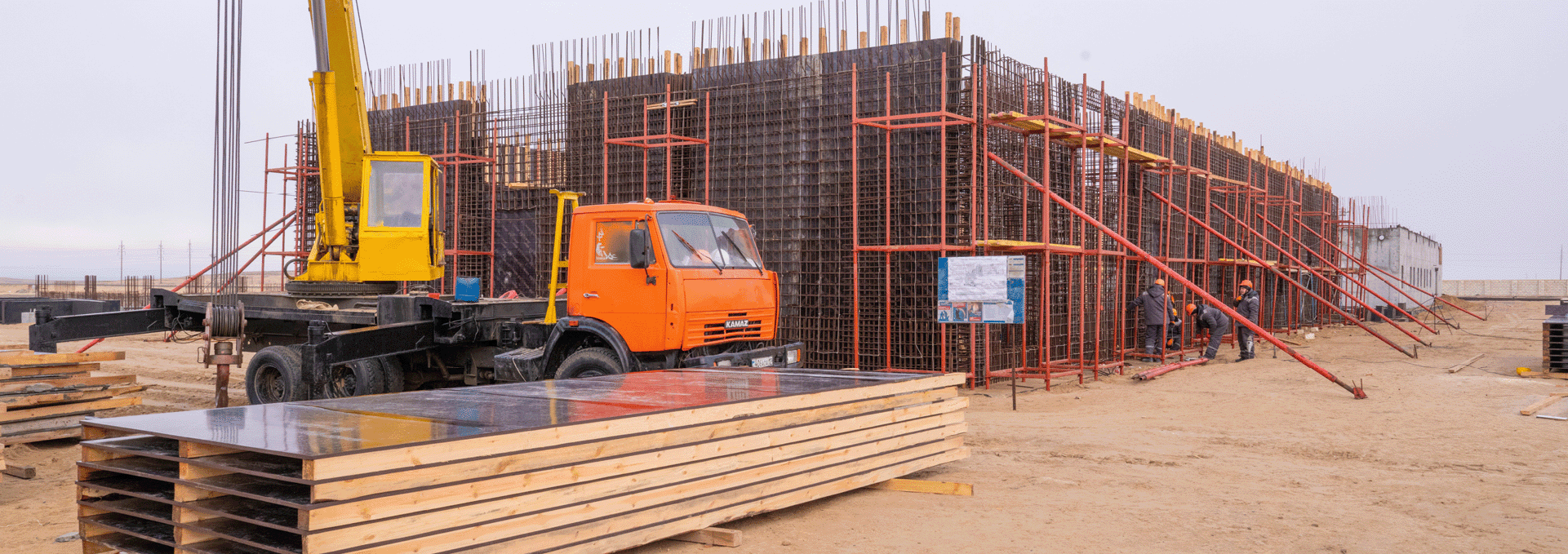
KazGPP is running a project to build a gas processing plant in Zhanaozen with a capacity of up to 900 mln m3 of natural and associated gas (KMG’s stake – 100%).
On 17 February 2025, Gosexpertiza gave its approval for Phase 1, with the core equipment manufactured and construction and installation underway from 3 March 2025. On 14 July 2025, an approval is issued for Phase 2 preparations and the construction of supporting facilities, with design documents drafted and submitted to Gosexpertiza.
Petrochemicals
KMG is developing the petrochemical business, which has a strong multiplier effect for the national economy. The integrated gas chemical complex comprises the following facilities:
- a polypropylene plant (KPI);
- a polyethylene plant;
- a gas separation unit (GSU);
- trunkline infrastructure for ethane and propane transportation in the Atyrau Region.
In 2025, KPI completed the implementation phase of its project to build a polypropylene plant in the Atyrau Region, with the facility expected to reach design capacity in 2026.
In 2024–2025, Phase 2 saw final investment decisions made and EPC contracts signed for the following facilities:
- a polyethylene plant;
- a GSU;
- ethane and propane trunklines.
The integrated gas chemical complex will operate using the full‑cycle technology.
Today, propane, the key feedstock, is delivered from Tengiz to KPI’s plant by rail, while ethane used to produce polyethylene cannot be transported likewise due to its physical and chemical properties and stringent storage requirements. To address this issue, two trunklines will be constructed to deliver liquefied ethane and propane from the GSU at Tengiz to the integrated gas chemical complex. Designed to provide secure logistics, the project will become part of the sustainable gas chemical cluster.
The Tengiz operator TCO will supply dry gas to be processed at the GSU directly from the field. Derived ethane will go to the polyethylene plant via the trunkline, while propane will be fed to the polypropylene plant via another pipeline.
.webp)
Building the first integrated gas chemical complex in the Atyrau Region, Phase 2 (polyethylene production)
Project company: Silleno
Project participants:
On 31 March 2025, the Company commenced the main construction of a 1.25 mtpa polyethylene plant in the special economic zone of the Atyrau Region.
The project comprises core pyrolysis and polymerisation units along with off‑site facilities.
Pyrolysis unit
In September 2024, the parties signed a relevant EPC contract and ordered equipment with a long lead time in January 2025. In March 2025, the EPC contractor started the main construction of the pyrolysis unit. Today piles and foundations are being put in place.
In 2026, equipment with a long lead time will arrive, and installation of steel structures and equipment will begin.
Polymerisation unit and off‑site facilities
On 29 May 2025, the parties signed a relevant EPC contract, with earthwork and piling currently underway. Engineering works and placement of orders for equipment with a long lead time and large‑sized units are in progress.
In 2026, installation of steel structures and equipment will begin.
Financing sources
In 2025, the project attracted USD 2 bln of bridge financing, with key long‑term project investments expected in 2026–2027.
Construction of the gas separation unit
Project company: KMG PetroChem
On 5 August 2025 the parties signed a relevant EPC contract. The GSU is expected to process up to 9.1 bln m3 of dry gas from Tengiz and produce up to 1.6 mln tonnes of ethane and around 360 thous. tonnes of propane per year.
Drafting of design documents and placement of orders for equipment with a long lead time are in progress. Early construction works, including site preparation (levelling, topsoil stripping, and delivery of inert materials), have started. In parallel, CCIC is upgrading its shift camp and setting a temporary office. In November 2025, trial piles were tested to confirm actual bearing capacity in soil.
In 2026, the focus will be on proceeding to the active construction phase.
Ethane and propane trunkline construction in the single right‑of‑way, Atyrau Region
Project company: KMG PetroChem
In 2Q 2025, the parties made a final investment decision to proceed to the construction phase, which includes laying ethane and propane trunklines each around 210 km long to transport liquefied ethane and propane from TCO facilities and the GSU at Tengiz to polyethylene and polypropylene plants.
In December 2025, the parties signed a relevant EPC contract.
In 2026, the project will see national technical regulations on liquefied ethane and propane trunklines drafted and approved, a detailed project design developed and approved by Gosexpertiza, equipment ordered, and construction and installation commence.
Promising petrochemical projects
In addition to the above projects, KMG is contemplating initiatives set to advance Kazakhstan’s chemical industry. These initiatives are poised to drive local economy, create jobs and increase tax revenue, while also boosting Kazakhstan’s export potential and addressing domestic market demands.
Construction of a terephthalic acid and polyethylene terephthalate plant
The project owner will be KMG PetroChem. At present, no strategic partner is selected, with negotiations underway. Financing structure and other parameters will be determined together with the strategic partner when the project is configured.
Construction of a urea complex
Project company: TBD In 2025, as part of Chinese President Xi Jinping’s visit to Kazakhstan, KMG, China National Petroleum Corporation, Kazakhstan’s Ministry of Energy, and the akimat of the Aktobe Region signed a quadrilateral framework agreement and reached a number of key agreements on expanding partnership in oil and gas and running the joint project.
A urea complex in the Aktobe Region is built to supply nitrogen fertilisers to agriculture and highly sought‑after chemical feedstock to enterprises, reducing import dependence, and strengthening the country’s export and industrial potential. In 4Q 2025, the preFS was designed.
Construction of a linear alkylbenzene complex
In 2025, as part of expanding international partnerships, KMG and its potential strategic partner Uzbekneftegaz signed a framework agreement on the contemplated construction of a linear alkylbenzene complex. Linear alkylbenzene is the key feedstock for detergents, such as washing powder, dish soap and bleachers. The project is at the pre‑project phase, and its costs are not yet evaluated.
Sustainable development projects
Construction of a desalination plant in the Mangistau Region
To deliver on priority sustainability goals and raise the social impact of its operations, KMG remains on track with infrastructure projects seeking to supply water to West Kazakhstan.
In 2025, we completed the construction of a desalination plant in Kenderli (Tokymak, Mangistau Region) commissioned in October of the same year. In December 2025, KMG transferred the facility to the Mangistau Region akimat free of charge. The KZT 121.2 bln project was financed from Ozenmunaigas’ own funds received through MET allowances.
For more details, see the Service Projects and Water Protection sections

Construction of a hybrid power plant in the Mangistau Region
KMG is building a hybrid power plant in the Mangistau Region in partnership with Italy’s Eni, with 51% owned by Eni and 49% – by KMG.
The project will combine solar, wind and gas generation. In 2024, the parties signed a relevant EPC contract for gas and solar power plants. In September 2025, the solar power plant was commissioned while the construction of gas and wind power plants is underway.
The preliminary cost estimate for the project is USD 348 mln.
Construction of a Mirny wind power plant (Aktas Energy LLP)
Aktas Energy, the joint venture of KMG, Samruk‑Energy and TotalEnergies (ownership split – 20%, 20% and 60%, respectively) is engaged in the construction of a 1 GW wind power plant with a 300MW/600MWh battery energy storage system in Mirny, Zhambyl Region. This is one of Kazakhstan’s largest renewable energy projects envisaging the installation of 150 6.5–7.7 MW wind turbines from Envision Energy and SANY Renewable Energy, global leaders in the field of clean energy equipment supply. In 2025, the FEED stage was completed, with detailed design nearly 81% ready and technical documents going through review.
The project seeks to make energy supply more reliable and make up for the shortage of electricity in the south of Kazakhstan, while also reducing CO2 emissions by over 2 mln tonnes per year. KMG hinges on this initiative to achieve its goals on cutting the carbon footprint and diversifying the energy portfolio.
Production of sustainable aviation fuel (SAF)
In 2025, ICF SH&E conducted a feasibility study for a sustainable aviation fuel (SAFSAF – sustainable aviation fuel.) plant, the first of its kind in Central Asia and the CIS. The project involving KMG, the European Bank for Reconstruction and Development, KazMunayGas-Aero, and Air Astana aligns with Kazakhstan’s Strategy to Achieve Carbon Neutrality by 2060 and IATA’sThe International Air Transport Association. commitment to net‑zero emissions by 2050. SAF is considered a promising alternative to fossil fuels due to its significantly lower carbon emissions.
The feasibility study identified alcohol‑to‑jet (ATJ) as the best technology for the first stage of SAF production in Kazakhstan thanks to the availability of resources. A viable pathway for converting ethanol derived from both biological and non‑biological sources, ATJ will help cut GHG emissions by 95% and improve energy efficiency.
To further promote economy decarbonisation and develop green energy, KazMunayGas‑Aero, US‑based LanzaJet, and Dostyk Leasing (BioOperations) signed an agreement to prepare a feasibility study of building a SAF plant in Kazakhstan. The project aims to localise advanced American technologies and create the region’s first‑ever SAF production in line with Kazakhstan’s climate and energy priorities while unlocking opportunities for long‑term industrial and tech partnership with the USA.
In September 2025, the parties signed a framework agreement stating that KazMunayGas‑Aero accepts the outcomes of the feasibility study and will proceed to the pre‑FEED and FEED (Front‑End Engineering Design) stages should the project be further approved by KMG.
In January 2026, KMG’s Investment Committee signed off an approval for KazMunayGas‑Aero and KazFoodProducts to proceed to the PDP (Detailed Process Design Package) stage.