
Statement from the Chairman of the Management Board
These achievements are no ceiling. The Company is expanding the scope of geological exploration, advancing flagship petrochemical projects, enhancing operational efficiency
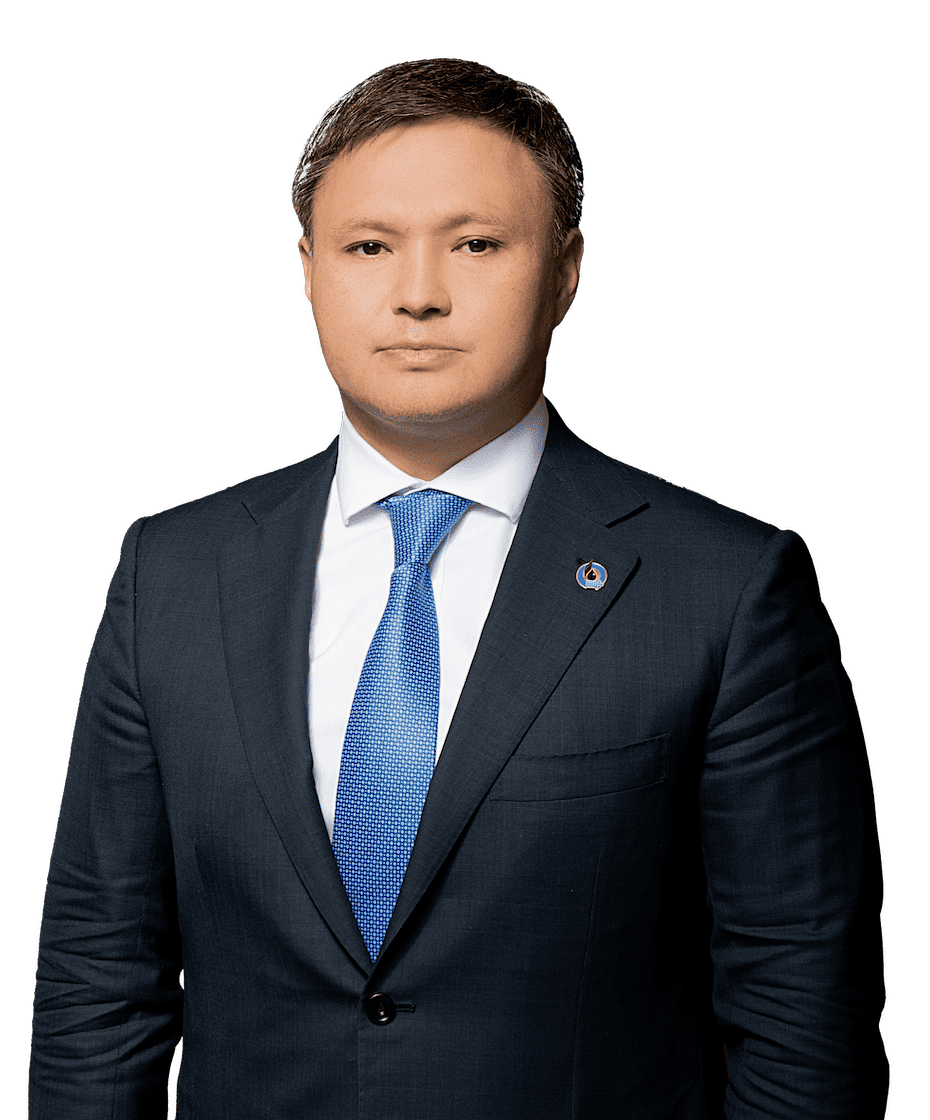
Askhat Khassenov Chairman of the Management Board at KMG
Dear shareholders, investors, and partners!
2025 marked a year of strong operational and financial performance for KMG as a result of consistent progress made under the Company’s Development Strategy for 2022–2031. KMG reached peak levels in oil and gas condensate production, natural and associated gas output, refining volumes, manufacturing of light oil products, and refining depth.
These achievements are no ceiling. The Company is expanding the scope of geological exploration, advancing flagship petrochemical projects, enhancing operational efficiency (including through digitalisation), developing additional transportation routes, and implementing advanced technologies and green solutions.
Financially, KMG demonstrated strong resilience as the net debt / EBITDA ratio reached 0.16х. With the Company now embarking on a large‑scale investment programme, this consistently low leverage provides financial flexibility needed to fund it.
Exploration
Exploration success rests on strong scientific and technological foundation. Over the past decade, KMG’s geological team has conducted systematic work encompassing comprehensive analysis and reinterpretation of legacy geological and geophysical data, building digital models for the main hydrocarbon‑bearing sedimentary basins – the Caspian, Mangyshlak, Ustyurt‑Bozashi, South Turgai, and Shu‑Sarysu basins – covering more than 30% of Kazakhstan’s territory. This has laid a solid foundation for developing new projects and reassessing the country’s hydrocarbon potential.
Building on regional studies, digital basin modelling, and preliminary seismic surveys, the Company has stepped up its exploration efforts, building a diversified project portfolio and launching full‑scale operations across the Mangistau, Aktobe, West Kazakhstan, Atyrau, and Kyzylorda regions.
In 2025, KMG signed four exploration and production contracts. The Berezovsky block in the northern marginal zone of the Caspian basin (West Kazakhstan Region), is being developed with Sinopec. CNOOC is the partner for the Zhylyoi block in the southern marginal zone of the Caspian basin (Atyrau Region and a section of Kazakhstan’s part of the Caspian Sea). The Northern Ozen block in the South Mangyshlak sedimentary basin (Mangistau Region) is being advanced independently (by KMG Barlau), as is the Bolashak block at the junction of the Ustyurt‑Bozashi and Caspian basins (Mangistau Region and a section of Kazakhstan’s part of the Caspian Sea).
I would also like to highlight the progress achieved under the subsoil exploration programmes (SE 1.0 and 2.0), which enabled not only large‑scale seismic surveys, but also returns on investments.
Under SE 2.0, seismic surveys were conducted in 2025 for the Bereke project (Caspian sedimentary basin) and the Shu‑Sarysu project (Shu‑Sarysu sedimentary basin) in the Atyrau and Ulytau regions, covering 1,800 km of 2D and 1,500 km2 of 3D surveys. In addition, 2,650 km of historical 2D seismic data from the Shygys project (Caspian sedimentary basin) in the Aktobe Region were reprocessed.
One of the clearest signs of intensified exploration activity is the expansion of exploration drilling operations. Only four prospecting wells were drilled across the entire 2020–2024 period, against eight in 2025 alone. A further 25 wells are planned before 2029, nine of them deep wells – marking a clear transition to a more ambitious and technically demanding phase of subsoil development.
In 2026–2029, KMG plans large‑scale exploration across the Caspian, Ustyurt‑Bozashi, Mangyshlak, South Turgai, Shu‑Sarysu, and North Turgai sedimentary basins, spanning the Atyrau, Aktobe, West Kazakhstan, Mangistau, Kyzylorda, Ulytau, and Kostanay regions.
The investment potential of this exploration portfolio is assessed as high, considering that hydrocarbon production is currently active in only five of Kazakhstan’s fifteen sedimentary basins. The country offers a favourable business environment, with government policy supporting exploration, the adoption of advanced technologies, and sustainable energy development.
As the national company, KMG assumes responsibility for pursuing large‑scale, capital‑intensive projects, including the transition to drilling deeper, geologically more complex targets with higher technological risks.
Among the most significant achievements of the year was obtaining a gushing flow of gas while testing the first target of a deep prospecting well at the Karaton Subsalt block (Atyrau Region), confirming the presence of hydrocarbons in deep‑seated horizons and opening a path for further development of subsalt structures.
Production
During the reporting year, oil and condensate production, including KMG’s shares in joint ventures and associates, hit an all‑time high rising by 10% year‑on‑year and reaching 26.2 mln tonnes. Gas production reached 11.4 bln m³, up 20% year‑on‑year.
The growth was primarily driven by the successful launch and ramp‑up of the new Third‑Generation Plant under the Future Growth Project at the Tengiz field. Oil production increased by 12 mln tonnes per year.
KMG’s operating oil‑producing assets delivered stable results across the board. The technical commissioning of Phase 1 at the West Prorva field and the launch of the new West Karasor field at Embamunaigas were completed successfully, contributing to a 2.2% rise in oil and gas condensate production to 2,850 thous. tonnes and an 18.1% rise in gas production to 242 mln m³. At the Dunga field in the Tupkaragan District of the Mangistau Region, oil production reached 677 thous. tonnes – up 7.5% year‑on‑year – driven by a targeted programme of geological, technical, and production measures to improve operational efficiency.
At Ural Oil and Gas LLP, gas production in 2025 reached 470 mln m³, while oil and gas condensate output totalled 343 thous. tonnes. Phase 1 equipment has now been fully deployed as per the design, positioning the asset for higher gas and condensate output in 2026.
In 2025, Urikhtau Operating concluded an agreement with CNPC International Aktobe Petroleum for the processing of raw gas at the Zhanazhol oil and gas processing facility. The agreement secures the processing capacity needed to begin commercial development of the Central Urikhtau field, with daily production targeted to reach 1 bln m³ of gas per year by end of 2027.
The Company takes consistent steps to increase production volumes and maintain the current production plateau with a view to offsetting natural declines at mature fields by focusing on the deployment of advanced technologies. As part of the road map to overcome technological challenges through the deployment of comprehensive advanced solutions, including dual injection techniques, conformance control, pilot slimhole drilling, and polymer flooding, we achieved incremental oil production of 434 thous. tonnes in 2025.
Transportation
The total oil pipeline and sea transportation volume came in at 83.3 mln tonnes. The Company continues to focus on maximising the operating rate of KMG’s oil transportation systems and diversifying export routes.
The Agreement on the Gradual Increase in the Transit of Kazakhstan’s Oil through Azerbaijan envisions boosting shipments along the Aktau–Baku–Tbilisi–Ceyhan route to 2.2 mln tonnes per year. Oil shipments from the port of Aktau via the Baku–Tbilisi–Ceyhan route amounted to 1.3 mln tonnes in 2025, with volumes dampened by the temporary suspension of supplies along the Aktau–Baku route between August and October 2025, due to technical restrictions on the Baku–Tbilisi–Ceyhan pipeline. That said, in 2025, oil transportation to Germany increased to 2.1 mln tonnes, up 40% year‑on‑year.
The Caspian Pipeline Consortium (CPC) pipeline remains the key export route, transporting 64.8 mln tonnes of Kazakhstan’s oil, which accounted for 82% of total exports through the oil transportation system in 2025. In the reporting year, KMG’s share in oil transportation through the Caspian Pipeline Consortium increased by 11% year‑on‑year. The Company gives priority to managing risks associated with the reliability of export infrastructure and takes steps to increase the resilience of its logistics chains.
Refining and marketing
Our refineries in Kazakhstan and Romania cumulatively processed 21.0 mln tonnes of hydrocarbons, hitting a new historic high and ensuring stable supplies of oil products. This result was achieved thanks to the efficient operation of the refineries.
In 2025, refining depth at the three largest refineries in Kazakhstan reached 90.1%, the highest figure in the Company’s history. Following the efforts to increase the output of light oil products, their yield across all refineries in the country reached 77.7%, which is yet another all‑time high.
Rising domestic demand for oil products and gas underscores the strategic importance of reliably supplying the home market, and shapes the Company’s emphasis on developing and expanding both oil and gas processing capacity.
The project to double the Shymkent Refinery processing capacity from 6 to 12 mln tonnes per year – implemented jointly with Chinese partner CNPC – is central to this effort. In 2025, the revision of the preliminary feasibility study was completed and work on the full feasibility study commenced.
KMG is also constructing a new gas processing plant in Zhanaozen with a capacity of 900 mln m³. This is an important industrial project of strategic significance for the region. In 2025, the construction and installation works commenced.
Petrochemicals
During the reporting year, the integrated KPI gas chemical complex expanded its product range to 15 grades and manufactured 377 thous. tonnes of polypropylene, with 326 thous. tonnes exported to Europe, China, Türkiye, and Russia. Thanks to supplies to the domestic market, Kazakhstan’s reliance on polypropylene imports declined to 8%.
KMG is implementing flagship projects in the petrochemical sector. With cheap feedstock readily available, KMG sees petrochemicals as its natural point of growth to rely on in expanding and improving the Company’s value chain and creating substantial multiplier effects for the country.
The integrated gas chemical complex will operate using the full‑cycle technology. In 2025, the Company commenced the main construction of a 1.25 mtpa polyethylene plant in the special economic zone of the Atyrau Region, with investments rounding approximately USD 7.4 bln. Early construction works also started on the gas separation unit. In 2025, we made a final investment decision for the ethane and propane trunkline construction project.
In addition to the abovementioned projects, more projects are considered to help KMG realise its full potential in the petrochemical sector. One of them is the construction of a urea production plant with a capacity of 800 thous. tonnes per year to supply nitrogen fertilisers for both the domestic and global markets.
Technology development and digitalisation
Scaling AI‑based solutions has become one of the key factors in improving operational efficiency, the reliability of production processes and business competitiveness. Further development of digital technologies remains a priority area for the Company. The ABAI information system, an in‑house solution of KMG powered by artificial intelligence and big data, comprises numerous independent modules designed to streamline processes in exploration, drilling, field operations and economic impact assessment. In 2025, the Company rolled out the Waterflood Management module across key producing assets such as Ozenmunaigas, Mangistaumunaigaz and Kazakhoil Aktobe.
Promotion of renewables
In 2025, we commissioned a 50 MW solar power plant in Zhanaozen as the first stage of a 247 MW hybrid power plant constructed in partnership with Eni S.p.A. under the Low‑Carbon Development Programme of KMG. The solar power plant supplies electricity to Ozenmunaigas and KazGPP, KMG subsidiaries, thereby improving the reliability and resilience of production processes. Construction of a 77 MW wind power plant and a 120 MW gas power plant is scheduled for completion in 2026. Once finished, the facility will operate as an integrated hybrid energy complex ensuring a balance between renewable and conventional generation.
The Company is implementing the Mirny project in the Zhambyl Region, seeking to build a wind power plant with a capacity of up to 1 GW and equip it with a modern energy storage system. This is one of the largest renewable energy projects in the country. In 2025, the Company completed feasibility studies and assessed the region’s wind potential.
Occupational safety
The Company gives priority to ensuring safe working conditions and protecting the health of its personnel and the population living in the areas where the Company’s production facilities operate. Introduction of digital solutions plays a crucial role in improving occupational safety. For example, in 2025, TUMAR, a smart video analytics system designed to prevent incidents and protect staff performing high‑risk operations, was deployed at KMG’s subsidiary Oil Services Company for well servicing and workover operations at the Zhetybai and Kalamkas fields of Mangistaumunaigaz.
Year of Working Professions
The President of Kazakhstan declared 2025 the Year of Working Professions. During the year, the Company focused on developing human capital and raising the profile of blue‑collar trades. Given the Company’s strategic importance for the national economy and its social role in the regions of operation, we pay special attention to the professional development of production personnel. KMG Group employs more than 44 thous. people in blue‑collar roles.
Throughout the year, the Company consistently expanded opportunities for professional training, staff upskilling, internships, and knowledge exchange. One of the key initiatives promoting manual labour and competence development is the annual Uzdyk Maman professional excellence competition held by KMG for over 10 years now. In 2025, the competition drew in around 300 employees from the Company’s subsidiaries across the Atyrau, Mangistau, Kyzylorda, Aktobe, and Pavlodar regions, Shymkent and Romania. In addition to the competition, the Company introduced a range of personnel development programmes, including the KMG Kasip upskilling programme covering 12 blue‑collar trades, modular training courses (with the NCCER‑certified Crew Leadership among them), the JanAru educational programme designed to help women pursue careers in working professions in the oil and gas industry, along with other similar initiatives.
Social development of the Company’s regions of operation
In 2025, following instructions from the President of Kazakhstan, KMG implemented two major social projects – a seawater desalination plant in Kenderly (Mangistau Region) with a daily capacity of 50 thous. m³ and the Schoolchildren Palace (Bolashaq sarayi) in the Mangistau Region with a total area of 3 thous. m². The plant will supply water to the residents of Zhanaozen and nearby settlements, while the new palace will provide children with modern facilities for education and creative development.
Given its significant contribution to the national economy, KMG will continue to support the sustainable development of the regions where it operates. In 2020–2025, the Company implemented social projects totalling KZT 356 bln. In 2025 alone, KMG transferred KZT 4.2 bln to local executive authorities under subsoil use contracts, while sponsorship and charitable assistance exceeded KZT 2 bln.
Conclusion
We will continue to focus on improvements in operational efficiency across our subsidiaries with a view to ensuring production stability and creating long‑term KMG value for our country, shareholders and investors. In 2025, I conducted more than 30 on‑site meetings at subsidiaries and joint ventures across core operations. These visits helped identify additional steps to improve the efficiency of the Company’s strategic initiatives.
In conclusion, I would like to thank all teams across KMG Group and our partners for their professional excellence and contribution to the results achieved in the reporting year. These results are the outcome of the coordinated efforts and strong expertise of the KMG team.