
Statement from the Chairman of the Board of Directors
 As part of the global economy, Kazakhstan is embarking on large‑scale digitalisation, in line with the strategic priorities set out in the Address of
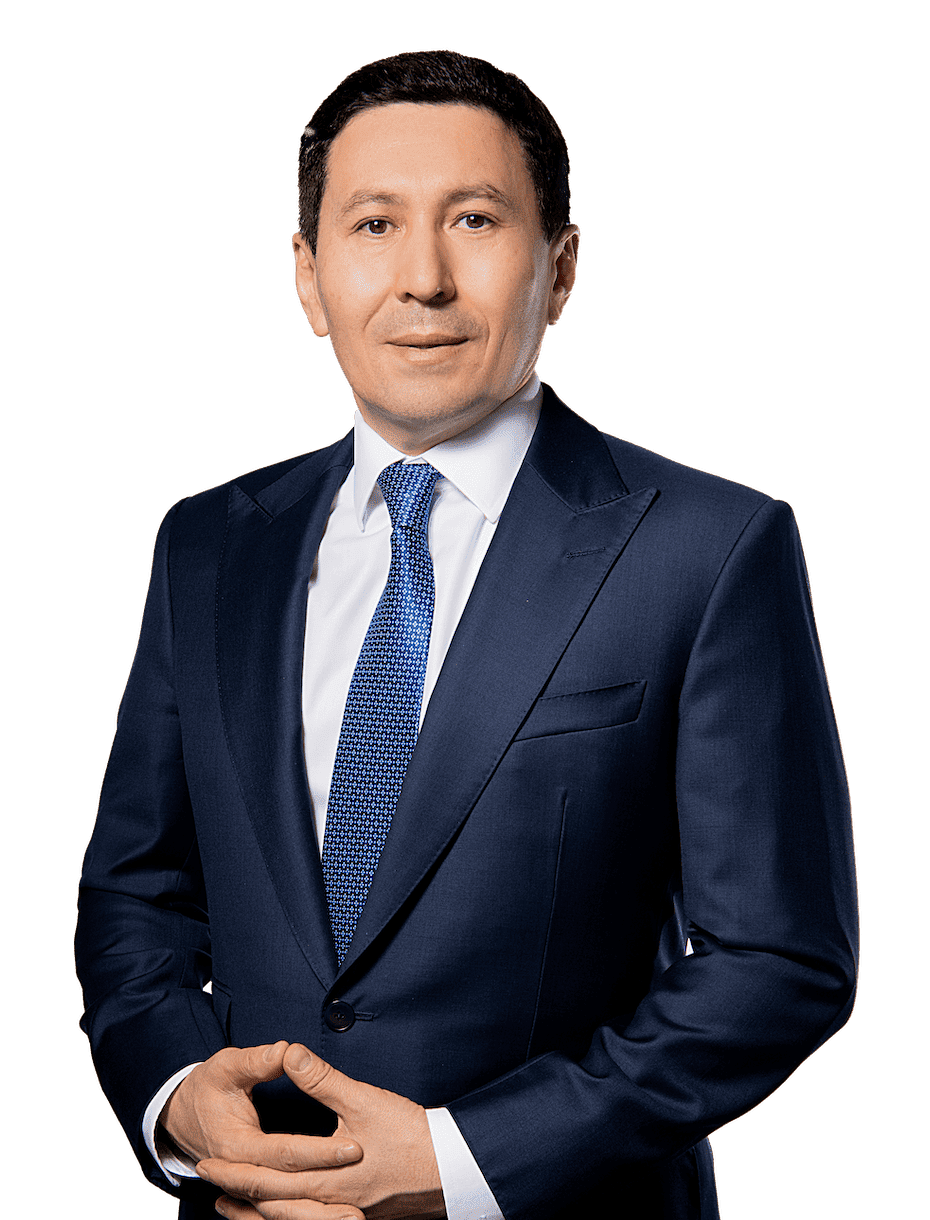
Kassym‑Jomart Tokayev, President of the Republic of Kazakhstan.Nurlan Zhakupov Chairman of the Board of Directors at KMG
Dear shareholders, investors, and partners,
In 2025, the global energy market continued its transformation amid geopolitical instability, tighter trade restrictions and accelerated technology development. The defining feature of the year was a shift in the market balance towards a sustained supply surplus, which increased price volatility and raised the bar for operational efficiency and investment discipline across the industry.
As part of the global economy, Kazakhstan is embarking on large‑scale digitalisation, in line with the strategic priorities set out in the Address of Kassym‑Jomart Tokayev, President of the Republic of Kazakhstan.
Responding to these challenges in 2025, the Company focused on key strategic priorities, including the consistent improvement of operational efficiency and adaptation of its business model to changing realities through the implementation of advanced technologies. This approach upholds the Company’s long‑term resilience and its ability to ensure the country’s energy security.
KMG’s role in national economy
Oil remains the cornerstone of Kazakhstan’s energy security and a key driver of sustainable economic growth, accounting for 16% of GDP and 53% of exports.
As the national leader in the oil and gas industry, KMG makes a substantial contribution to the nation’s economy, including by strengthening competitiveness and enhancing social welfare. Today, KMG accounts for approximately 26% of oil and gas condensate production, 17% of gas production, 55% of transportation, and 80% of refining in Kazakhstan.
Resource base sufficient to support the Company’s growth
KMG focuses on advancing exploration as one of its key priorities, consistently striving to strengthen the national mineral resource base, including through active appraisal of existing assets and exploration at new prospective blocks.
KMG’s exploration portfolio includes both projects implemented in partnership with international companies and fully in‑house projects. This portfolio is supported by an attractive investment environment, including macroeconomic stability in Kazakhstan and an improved model contract for complex projects signed by the President of the Republic of Kazakhstan in 2023.
Improved efficiency across the Company’s value chain
The Company continues to employ a systematic approach with a view to ensuring the stability of its operating assets and strengthening vertical integration across the entire chain.
To offset natural decline at mature fields, KMG consistently improves production efficiency through the deployment of advanced technologies.
In 2025, with the launch of crude oil production at the new Third‑Generation Plant at the Tengiz field, Tengizchevroil reached a key milestone of its Future Growth Project ahead of schedule. Large‑scale investment initiatives under megaprojects play a crucial role in building the Company’s long‑term production growth potential by replenishing its production base and ensuring output stability.
In 2025, the Company continued to expand additional transportation routes by strengthening export diversification and supply reliability in the rapidly changing external environment. Furthermore, during the reporting year, KMG initiated the construction of two container vessels for the Caspian Sea in cooperation with AD Ports Group, while also exploring the creation of a new rail ferry system between Kazakhstan and Azerbaijan as a way to enhance ferry and container shipping capacity along the Trans‑Caspian International Transport Route.
All the three major refineries continued to honour their commitment to produce socially important oil products. Improved production efficiency resulted in higher refining volumes and increased yields of light oil products. To minimise the impact of maintenance campaigns on the domestic market, the Company proactively built up the necessary inventories and adjusted production plans, thereby ensuring stable supply and contributing to the national fuel market equilibrium.
Business diversification and product portfolio expansion
Development of the petrochemical segment as one of the key drivers for global oil demand is a strategically important avenue for business diversification and production of competitive, high value‑added products for both domestic and export markets.
The creation of an integrated gas chemical cluster in the Atyrau Region, including polyethylene production, construction of a gas separation unit and trunkline infrastructure for ethane and propane transportation, sets the stage for deeper in‑country feedstock processing.
Improving corporate governance
In 2025, the KMG Board of Directors continued its systematic work to strengthen corporate governance, drawing on best practices and the requirements of Samruk‑Kazyna. The approval of the revised Corporate Governance Code raised the bar for the performance of the Board and KMG’s executive body, formalised relevant principles of shareholder engagement, and sharpened the focus on sustainable development and ESG matters. Adherence to corporate governance principles and business ethics remains a standing priority for KMG’s Board of Directors.
Sustainable development
The Company consistently develops its sustainability framework by ensuring a balanced approach to economic, environmental and social priorities and continuously improving corporate governance.
In support of the global climate agenda, the Strategy for Carbon Neutrality of Kazakhstan by 2060 and the country’s international commitmentsRatification of the Kyoto Protocol in 2009 and the Paris Agreement in 2016 and accession to the Global Methane Pledge., KMG is running its Low‑Carbon Development Programme 2060 with an ambition to reduce CO2 emissions by 15% by 2031 and by 64% by 2060 from the 2019 baseline.
The programme focuses on the following key areas: improving energy efficiency, developing renewable energy sources, monitoring and reducing methane emissions, and others. The Company is also assessing innovative low‑carbon technologies such as carbon capture, utilisation and storage (CCUS) and hydrogen energy. In 2025, KMG prepared a feasibility study for blue hydrogen production and developed a Digital Atlas of Water Resources to support green hydrogen production in several regions of the country.
The promotion of sustainable aviation fuel (SAF) is viewed as a strategic element of diversifying the refining segment and a contribution to the transport decarbonisation. In the reporting year, the Company signed an agreement to develop a feasibility study for the construction of an SAF plant in Kazakhstan, marking transition to the next stage of design involving comprehensive technical and economic evaluation. The project will establish Central Asia’s first export‑oriented centre for producing SAF with high added value, strengthen Kazakhstan’s position as a transit aviation hub and contribute to the national climate targets.
In 2025, the Company’s sustainability management system received an MSCI ESG rating of BBB, which acknowledged significant progress in environmental and social areas, including biodiversity, health and safety matters. At the same time, experts identified areas for improvement in managing certain ESG risks, with the Company undertaking to address them going forward. KMG maintained a “B” climate rating from the Carbon Disclosure Project (CDP) for 2024.
The Company continues to implement a phased energy efficiency improvement model. Through more than 300 initiatives, the Company aims to save over 500 thous. tonnes of fuel by 2031.
Economic contribution and local content development
The Company makes a significant contribution to Kazakhstan’s public revenues. In 2025, KMG remained one of the country’s largest taxpayers, with total taxes and other mandatory payments to the national budget reaching KZT 2.3 tln.
The participation of domestic manufacturers in KMG projects plays a vital role in the national economic development, creating new jobs and enhancing the competitiveness of Kazakhstan products. In 2025, total volume of procured goods, works and services, including long‑term procurement contracts, amounted to KZT 2.3 tln, with the share of in‑country value coming in at 78%. KMG also supports domestic manufacturers through off‑take contracts. In the reporting year, the Company signed 124 off‑take contracts worth KZT 16 bln. An analysis of procurement plans for 2025–2029 identified approximately 5 thous. product categories proposed for localisation with a total value of KZT 350 bln.
Financial stability
Reflecting improvements in KMG’s standalone credit metrics and financial resilience, S&P Global Ratings upgraded the Company’s credit rating from “BB+” to “BBB–” with a stable outlook. Strong financial performance of KMG has underpinned three consecutive years of record high dividends, with the total amount coming in at KZT 900 bln. In 2025, the price of the Company’s shares increased nearly 1.5‑fold, reflecting strong investor demand and confidence.
Conclusion
KMG’s Development Strategy for 2022–2031 is proving its relevance amid structural changes in the global energy market and a volatile external environment, as it ensures the Company’s strategic resilience by maintaining a balance between energy security, long‑term growth, and responsible development for the benefit of the state and all stakeholders.
The 2025 performance confirmed our business resilience and the effectiveness of the strategic course amid the ongoing external challenges.
The achievements of the reporting year were made possible by the coordinated efforts of the management team, employees, partners and all stakeholders who contributed to the development of KMG.